Elbark’s Destinations in Komodo National Park
Elbark Cruise visits nine stops inside Komodo National Park across its 3D2N route: Kelor, Manjarite and Kalong on Day 1; Padar, Pink Beach, Komodo Island, Taka Makassar and Manta Point on Day 2; and Sebayur on Day 3. Here is what each stop actually is, why it earns its place on the route, and who it suits best.
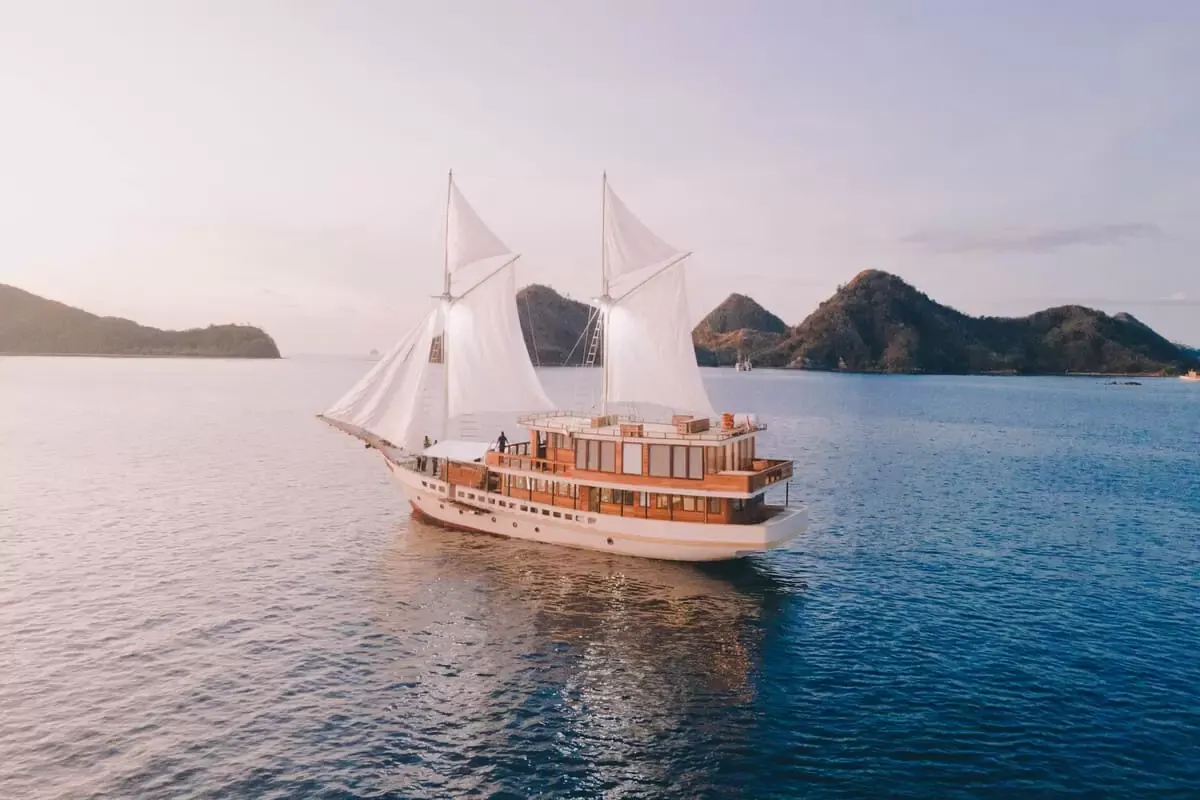
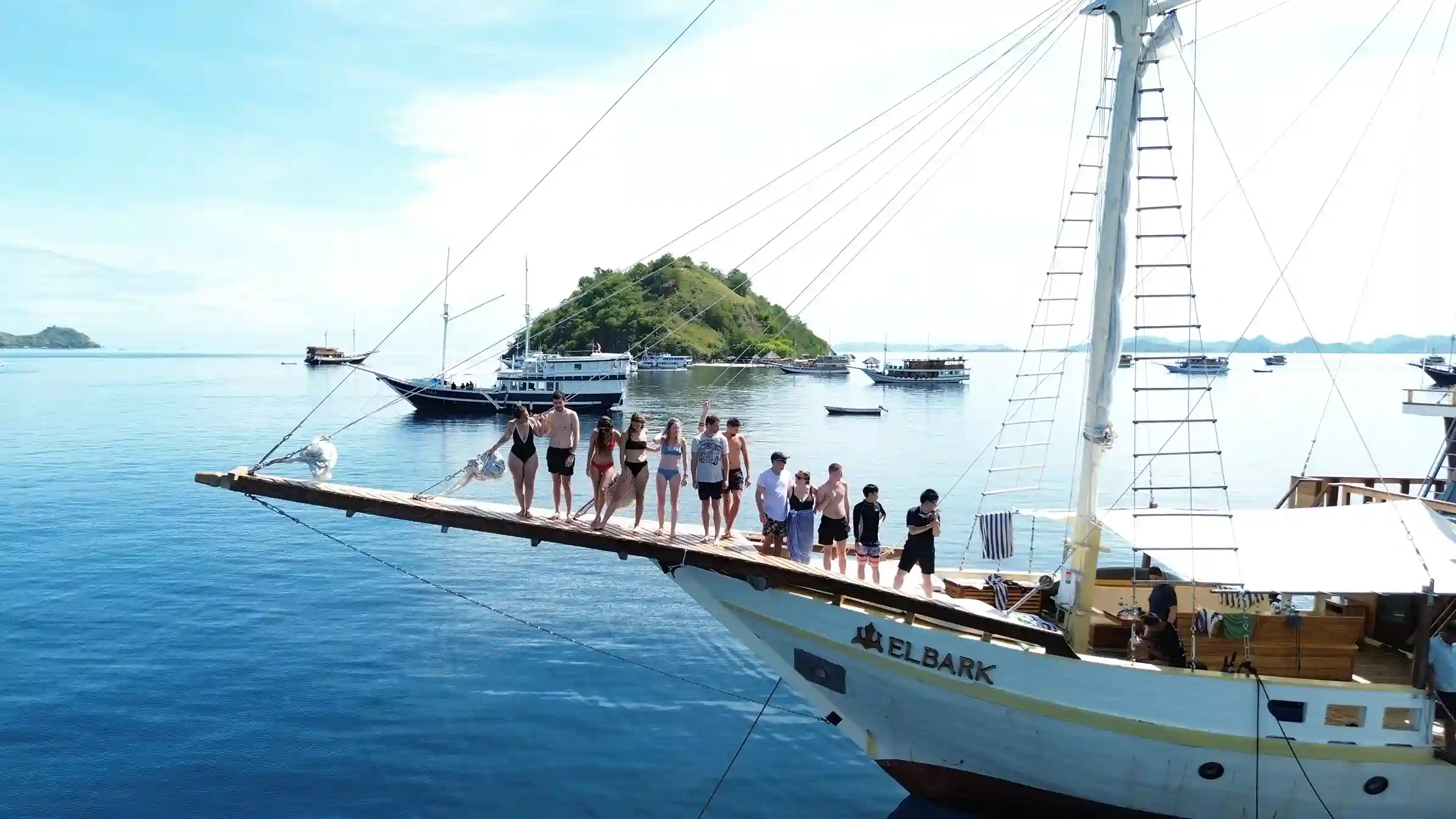
Elbark Cruise is a 37-meter luxury VIP phinisi with 9 en-suite air-conditioned cabins for up to 21 guests, sailing this same nine-stop route on every Friday share trip and on every private charter built from it. This page is a destination-by-destination overview — for the hour-by-hour schedule, see the 3D2N itinerary; for the wider story of the national park itself, including permits, dragon biology and park rules, the Komodo National Park travel guide covers that ground in depth. Official booking is handled by Komodo Luxury, the trusted yacht operator (TripAdvisor Travelers’ Choice 2025).
The Nine Stops at a Glance
Every stop below sits inside Komodo National Park, reachable from Labuan Bajo within the three-day loop Elbark sails weekly. The table gives the shape of the route; the sections that follow explain what makes each place worth the anchor time.
| Stop | Day | What it’s known for | Effort level |
|---|---|---|---|
| Kelor Island | 1 | Short summit hike, panoramic first view of Elbark at anchor | Moderate, brief |
| Manjarite | 1 | Calm reef, the trip’s shakedown snorkel | Easy |
| Kalong Island | 1 | Sunset flying-fox migration, watched from the deck | None |
| Padar Island | 2 | Three-bay sunrise viewpoint, the park’s signature photo | Moderate–challenging |
| Pink Beach | 2 | Rose-tinted sand from crushed red coral | Easy |
| Komodo Island | 2 | Ranger-guided Komodo dragon trek at Loh Liang | Easy–moderate |
| Taka Makassar | 2 | Isolated mid-sea sandbar, top drone frame of the trip | Easy |
| Manta Point | 2 | Drift snorkel with reef manta rays at Karang Makassar | Moderate |
| Sebayur Island | 3 | Sheltered farewell reef, calmest snorkel of the route | Easy |
Day 1 Stops: Kelor, Manjarite & Kalong
Day 1 is the introduction — one short climb, one gentle reef, and one of the strangest wildlife sights in Indonesia, all within easy sailing of Labuan Bajo.
Kelor Island
Kelor is a small, steep-sided cone rising straight out of the sea, with a single ridge trail to its summit. The climb runs 15–20 minutes for most guests — short but genuinely uphill, so proper shoes help more than sandals. From the top, the view opens across turquoise shallows to Elbark riding at anchor below, usually the first photograph everyone takes on the trip. Guests who prefer not to climb can swim from the beach instead while others make the ascent. Kelor works as a warm-up destination precisely because it delivers a big view for a small effort, setting expectations for the bigger hikes still to come at Padar.
Manjarite
A short hop from Kelor, Manjarite is a sheltered reef area with calm, current-free water — the easiest snorkel on the entire itinerary and the natural place to get comfortable with mask and fins before Day 2’s more demanding sessions. The coral here is dense and shallow, with reef fish visible just below the surface, making it forgiving for first-time snorkelers and a reliable spot for the crew’s underwater photography. Manjarite’s role on the route is understated but deliberate: it is the stop that lets nervous swimmers build confidence before Manta Point.
Kalong Island
Kalong takes its name from the Indonesian word for flying fox, and at dusk its mangrove colony lives up to it — tens of thousands of giant fruit bats stream out across the sunset toward Flores to feed. Elbark anchors offshore and guests watch the entire spectacle from the deck with no landing required, followed by dinner as the boat settles in for the night. It is the one Day 1 stop that asks nothing physical of guests and delivers one of the most talked-about moments of the whole trip.
Day 2 Stops: Padar, Pink Beach, Komodo Island, Taka Makassar & Manta Point
Day 2 carries the five stops most people book Elbark for, sequenced so each happens at its best hour of the day — Padar at dawn, the dragon trek before midday heat, and the water stops once the afternoon current settles.
Padar Island
Padar is the most photographed viewpoint in Komodo National Park: a stair-assisted trail climbing to a ridge that frames three separate bays — one white sand, one grey, one faintly pink — beneath serrated volcanic hills. The ascent takes 30–40 minutes at a steady pace, with rest points along the way, and is best done at sunrise, both for the light and to beat the crowds arriving later from Labuan Bajo day trips. It is the hardest physical stretch of the itinerary, and consistently the one guests rate as the highlight.
Pink Beach
Pink Beach earns its name from fragments of red organ-pipe coral mixed into the white sand, a color that intensifies right at the waterline in morning light. Compared with Padar, this is a low-effort stop — swim, snorkel the fringing reef just offshore, or simply walk the shoreline while the color contrast against the turquoise water does the work. It is the itinerary’s easiest scenic payoff, scheduled directly after breakfast so guests arrive relaxed rather than rushed.
Komodo Island
This is the stop that gives the national park its name. At the Loh Liang ranger station, licensed park rangers lead small groups along fixed trails to observe wild Komodo dragons — the world’s largest living lizard, growing up to three meters. Rangers set every rule on site: stay grouped, keep distance, no sudden movement. The walking itself is flat and manageable at any fitness level; sightings around the station and waterholes are common, though as with any wild animal, no operator can guarantee one on a given day. For safety context on the trek, see the safety standards page.
Taka Makassar
Taka Makassar is a narrow crescent of pure white sand rising out of open water, shrinking toward nothing at high tide. Elbark anchors off and tenders guests across for what is usually the trip’s single most striking photograph: a ribbon of sand with nothing else to the horizon. A shallow reef fringes the sandbar for easy snorkeling between shots. It shares its afternoon time block with Manta Point, and the crew sequences the pair by tide and manta activity rather than a fixed clock.
Manta Point
Officially Karang Makassar, Manta Point is a wide channel where reef manta rays gather at cleaning stations, and it is the one stop that rewards being a confident swimmer. The technique is a drift snorkel: the tender drops the group up-current and everyone glides over the site as mantas — some spanning several meters — pass below. Life vests are provided and the crew shadows the group by boat, so hesitant snorkelers can also watch from the tender. Sightings track tide and season rather than a schedule, which is exactly why this stop and Taka Makassar are treated as one flexible afternoon block.
Book Elbark Cruise — Official Booking Partner
Elbark Cruise bookings are handled exclusively through booked through Komodo Luxury, winner of TripAdvisor Travelers’ Choice awards. Get live cabin availability and 2026–2027 schedules.
Day 3 Stop: Sebayur
Sebayur Island
Sebayur closes the loop with a gentle, sheltered reef on the sail back toward Labuan Bajo — healthy coral slopes, good fish life, and none of Manta Point’s current. After two days of bigger stops, it functions as a quiet epilogue: one last easy swim, then a fresh-water rinse and an early lunch on deck as the karst islands slide past on the way home. Guests who found Padar or Manta Point demanding tend to enjoy Sebayur most, simply because nothing about it asks for effort.
Which Stops Matter Most to You
All nine stops run on every standard departure, but which ones you look forward to most depends on what you came for.
| If you care most about… | Prioritize these stops |
|---|---|
| Photography and drone shots | Padar (sunrise panorama), Taka Makassar (sandbar), Kalong (sunset bats) |
| Wildlife | Komodo Island (dragons), Manta Point (manta rays) |
| Easy, low-effort days | Manjarite, Pink Beach, Sebayur |
| Snorkeling quality | Manta Point, Manjarite, Sebayur |
| A physical challenge | Padar’s sunrise trek, Kelor’s short climb |
Guests planning a private charter can lean into this — the 4D3N private itinerary keeps the same nine-stop backbone but adds a flexible fourth day, so a group that wants extra time at Manta Point or a second sunrise at Padar can simply ask for it.
Beyond Elbark’s Route: The Wider Komodo National Park
These nine stops are the working route Elbark sails every week, chosen because they cover the park’s headline sights — dragons, mantas, the pink sand, the Padar panorama — inside a comfortable 3D2N window. They are not the entire national park; Komodo covers a much larger archipelago with dive sites, lesser-visited islands and seasonal variations that a single boat’s fixed itinerary can’t capture. For that broader picture — park permits, dragon biology, best travel months and planning logistics that sit outside what happens on board — the Komodo National Park travel guide is the deeper resource, while this page and the 3D2N itinerary stay focused on Elbark’s specific route through it.
Frequently Asked Questions About Elbark’s Destinations
Does Elbark visit all nine stops on every trip?
Yes, the nine stops are the published route for every standard 3D2N departure. The crew may adjust order, exact timing or anchorage within a stop for weather, tide or park-authority instructions — most visibly in the Day 2 afternoon block between Taka Makassar and Manta Point — but the nine destinations themselves are fixed.
Which Elbark stop is best for photography?
Padar Island’s sunrise viewpoint is the most photographed spot on the route, followed closely by the isolated sandbar at Taka Makassar and the sunset bat migration from Kalong Island. All three are shot from very different vantage points — a ridge trek, a drone-friendly sandbar, and the boat’s own deck — so a serious photographer gets three distinct types of image from one trip.
Are Komodo dragons guaranteed at Komodo Island?
No responsible operator guarantees wild-animal sightings, and Elbark does not either. In practice, dragon sightings on the ranger-guided Loh Liang trek are very common around the station and waterholes, but rangers control every aspect of the visit for safety, and the animals are wild.
Can a private charter change which stops we visit?
Within Komodo National Park’s rules, yes. Private charters follow the same nine-stop backbone but can linger longer at a favorite stop, repeat Manta Point, or extend toward additional islands on the 4D3N route. See the 4D3N private itinerary and the 2026–2027 schedule for available dates.
How physically demanding are these nine stops?
Moderately fit guests handle all nine comfortably. The two real efforts are Kelor’s brief 15–20-minute climb and Padar’s 30–40-minute ascent; everything else — Manjarite, Pink Beach, the Komodo Island trek, Taka Makassar and Sebayur — is easy, and Manta Point’s drift snorkel is the only water stop that asks for confident swimming.
Reserve Your Cabin on the Next Friday Departure
Elbark Cruise bookings are handled exclusively through booked through Komodo Luxury, winner of TripAdvisor Travelers’ Choice awards. Get live cabin availability and 2026–2027 schedules.